Beans and Lentils: Dry, Cooked, Canned and Drained Are Different Records
A bag of dry lentils and a bowl of cooked lentils are not interchangeable calorie references. Canned beans add another question: does the weight include packing liquid? Identify the edible preparation before calculating, and keep sauces separate unless the selected record already includes them.
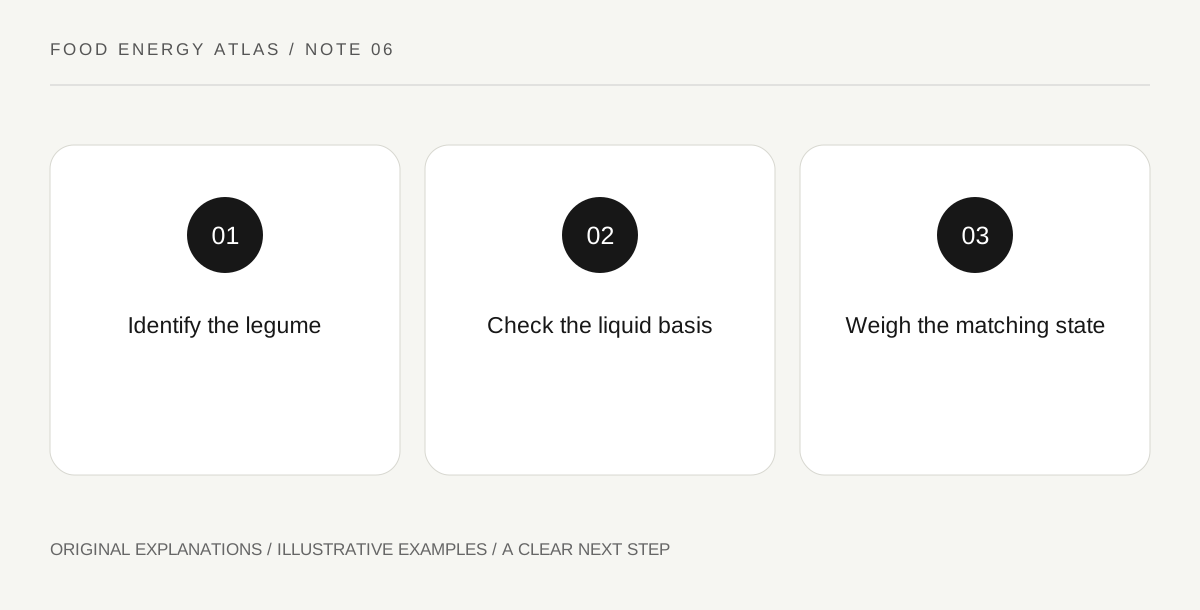
Original explanatory diagram. Read the full method and limitations below.
Read the legume and preparation together
Begin with the specific food, such as lentils, chickpeas or kidney beans. Then read the entire preparation description. Dry mature seeds, boiled cooked seeds and canned products describe different materials. A broad search for beans can also return green beans or prepared dishes with recipes unlike your own.
Use the exact reference name in your notes. If you chose a canned drained entry, do not shorten it to dry beans when recording a later portion. That small wording change destroys the link between grams and the source concentration. Product packaging may offer a more appropriate current reference for the can actually used.
Distinguish packing liquid from edible beans
Look at whether a label states net weight, drained weight or nutrition for the product as sold. Those quantities are not automatically equivalent. If the selected database entry describes drained solids, weigh the solids after a comparable draining step rather than pouring the entire can's contents onto the scale.
Drainage is a practical method, not a promise that every bean batch has identical remaining moisture. Use a consistent approach when comparing your own portions. If you eat the packing liquid in a soup, consider a record or recipe method that includes it, rather than pretending that only the drained beans entered the meal.
Follow a measured cooked batch
For legumes cooked from dry, you can use a matching cooked reference with finished edible weight. Alternatively, calculate the dry ingredient amount and distribute an estimated batch total across the cooked yield, stating assumptions about any discarded liquid or other losses. Avoid combining both routes for the same ingredient.
The cooked yield depends on the food, soaking and cooking method. A remembered ratio from a different bean is not a measured yield for this batch. Weighing the drained finished food gives a clearer basis when portions will be shared, especially if the amount of liquid left in the pot varies between preparations.
Add the dish around the beans
A bean salad with oil, a sweet baked-bean product and plain boiled beans are not the same food. Treat dressing, cheese, meat or sugar as separate recipe components unless included in a prepared-food reference. The choice of a generic plain bean record does not estimate those additions.
For a mixed dish, stir before portioning and note whether heavier ingredients collect at the bottom. Weight-based batch division assumes a reasonably representative portion. If one bowl contains mostly broth and another mostly beans, equal bowl weights do not establish equal ingredient shares. The calorie estimate should follow the actual serving method rather than the container's appearance.
An illustrative calculation
Suppose an illustrative drained bean reference is 110 kcal per 100g. Weighing 160g drained solids gives 176 kcal. If a dressing contributes another 35 kcal to that serving, the combined estimate is 211 kcal. Entering the can's hypothetical 300g net contents against the drained-solids value would describe a different amount, including liquid that might never be eaten. The figures here are invented to show the distinction, not a label for any named bean product.
Practical checks
Optional checkboxes save only in this browser.
Questions that come up
Can rinsed canned beans use any canned-bean number?
Choose the closest description and acknowledge the preparation difference. This tool does not measure the effect of your rinsing process and cannot justify subtracting an invented energy percentage.
Does a dry-bean cup equal a cooked-bean cup?
No. They describe different states and amounts. If using a household measure, its source weight must correspond to that specific food and preparation. Direct gram measurement avoids assuming a universal cup conversion.
References and scope
These sources support the factual background. Examples and exercises are original illustrative teaching material. References do not imply endorsement.
- USDA FoodData Central downloadable datasets — The original SR Legacy CSV archive, its final 2018 release and the source of the searchable food records.
- USDA FoodData Central data-type documentation — Differences among historical generic reference data, foundation foods and branded label data.