Potato Calories: Separate the Cooking Method From the Topping
Plain boiled potato, baked potato and fried potato pieces belong to different reference descriptions. Weights and added ingredients differ, and a topping may be a separate part of the meal. Read those details instead of looking for one universal number assigned to every potato.
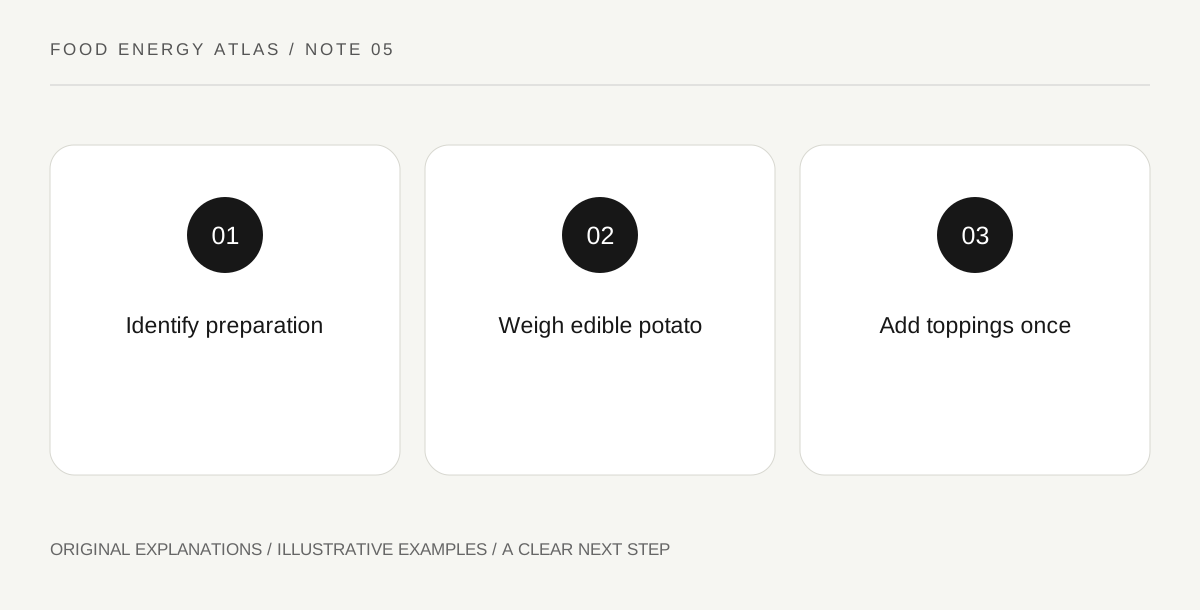
Original explanatory diagram. Read the full method and limitations below.
Identify the preparation
Search for the cooking method and read whether skin is included. A plain cooked reference may distinguish flesh only from flesh and skin; prepared products can include fat or other ingredients. The wording helps you avoid comparing a peeled cooked portion with different edible material.
A raw potato weight works in an ingredient-based recipe estimate, but should not be entered against a cooked-food concentration without explanation. If weighing a finished plain potato, a matching cooked reference offers a simpler route. Keep the selected state consistent throughout. The useful search result describes the food on your plate, rather than merely containing the same vegetable name.
Notice the changing water content
Cooking changes texture and can change water content. A baked food that loses moisture can have a different energy concentration per 100g from a boiled version before toppings are considered. The reference describes the resulting material, not just the plant name at the start of the entry.
Weighing an individual cooked potato is therefore more informative than assuming all medium potatoes weigh the same. Size descriptions are rough categories. A scale supplies a particular edible amount, provided you have excluded parts you will not eat and matched the record's skin description. Keep scraps and uneaten skin separate if they materially change the portion being estimated.
Calculate toppings separately
Butter, cheese, oil-based dressing and other additions have their own reference amounts. Weigh a topping separately when practical, or use its package serving information. A spoonful is difficult to interpret if spoon size and filling are unknown. Grams make the calculation easier to repeat without inventing a universal spoon weight.
If an entry describes mashed potato prepared with milk and fat, do not add those ingredients again unless accounting for extra additions beyond that reference. Homemade mash with known ingredients often works better as a recipe calculation. Keep the plain potato contribution and additions on separate lines so a later portion change can be traced to the relevant ingredient.
Treat fried products as different foods
A fried potato product cannot be reconstructed reliably by adding arbitrary oil to a plain potato value. Thickness, surface area and preparation affect the finished food. Use a matching product label or relevant prepared-food reference, and note uncertainty when the exact method is unknown.
The same applies to a loaded restaurant potato. A generic estimate may establish a rough description but cannot reveal the kitchen's actual topping amounts. An honest result may be a range of plausible assumptions rather than a single exact figure. Avoid presenting an estimate as a tested restaurant measurement or a verified analysis of a meal you did not prepare.
An illustrative calculation
Assume, only for arithmetic, that a matching plain cooked potato record gives 85 kcal per 100g. A180g edible portion would be 153 kcal. If a measured topping contributes 45 kcal, the combined estimate is 198 kcal. Choosing a prepared potato entry that already included that topping and then adding 45 again would count the addition twice. None of these invented values should replace the actual record or product label used for your food.
Practical checks
Optional checkboxes save only in this browser.
Questions that come up
Are all potatoes of one size equal?
No. Size words are approximate, and preparation changes weight. A specific edible cooked weight with a matching reference is clearer than assigning one value to every medium potato.
Does the lowest value identify the healthiest method?
A calorie concentration cannot establish an overall health ranking. Consider full preparation, nutritional context, enjoyment and individual needs rather than treating one energy field as a complete assessment.
References and scope
These sources support the factual background. Examples and exercises are original illustrative teaching material. References do not imply endorsement.
- USDA FoodData Central downloadable datasets — The original SR Legacy CSV archive, its final 2018 release and the source of the searchable food records.
- USDA FoodData Central data-type documentation — Differences among historical generic reference data, foundation foods and branded label data.