Nuts, Seeds and Nut Butter: Match Shells, Mixes and the Actual Portion
A handful of nuts is an intuitive serving description but an uncertain measurement. Shells, roasting ingredients and mixed products add more differences. Use the edible food and its exact form as the reference, then calculate the weight you actually intend to describe rather than a universal handful.
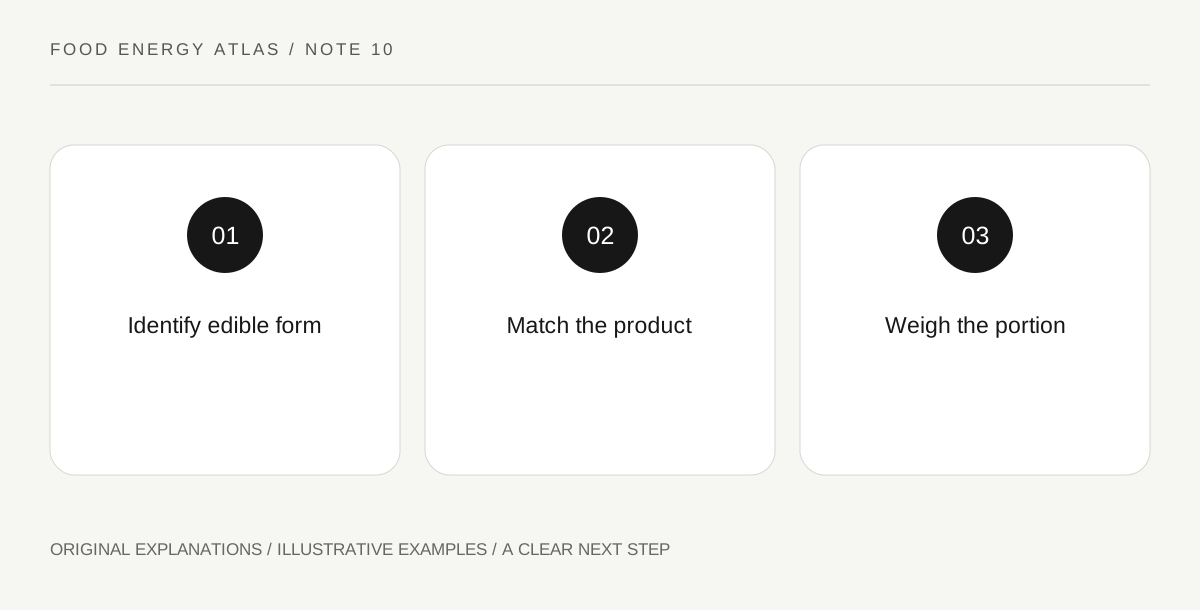
Original explanatory diagram. Read the full method and limitations below.
Keep shells out of edible weight
A nut reference generally describes the edible material identified in its name, not the package with shells. If you weigh shell-on nuts, either separate and weigh the kernels or use a reliable matching edible-portion method. The discarded shell should not be treated as edible grams against a kernel reference.
For seeds, read whether the entry describes whole seeds, kernels or another form. This can matter when products are eaten differently. Do not infer the edible basis from a front-of-pack photograph. The record's wording and the material on the scale need to agree before the energy concentration can be meaningfully applied.
Distinguish plain products from preparations
Raw, dry-roasted, oil-roasted, sweetened and chocolate-coated products may have separate records. Nut butter can also include additional ingredients. A current package label is often the clearer source for a specific packaged spread or snack than a historical generic record that happens to share its main ingredient.
When comparing two products, put the energy values on the same basis. Per 100g data compare concentration; weighed portions compare the amounts you would actually eat. Neither comparison alone establishes an overall nutritional ranking. Ingredient lists, other nutrients and suitability for the person eating the food remain separate questions.
Treat mixed products as mixtures
A trail mix with different nuts, dried fruit and chocolate is not described by one plain almond reference. The blend proportions determine the mixture's composition. Use the actual product label when available, or calculate a known homemade mixture from its ingredients and measured final weight.
An uneven scoop may contain more of one component than another. Mixing before portioning improves the representativeness of a weight-based estimate but does not guarantee identical servings. If you deliberately pick out one component, the original mixture calculation no longer describes that selected portion. Keep the serving method alongside the recipe assumptions.
Make a spoonful reproducible
Nut butter clings to utensils, and a heaped spoonful is not a defined gram amount. You can tare a dish and weigh the portion, or use the product's stated serving grams if your portion actually matches them. A smear left on a spoon introduces a small practical uncertainty; it is not a reason to invent precision.
Stir products according to their directions when separation affects a representative serving. A scoop taken only from separated oil does not have the same composition as a well-mixed spread. Keep all allergy and product-use questions outside the calorie calculation: this tool cannot establish whether a nut or seed product is safe for a particular person.
An illustrative calculation
Imagine a plain nut reference at 600 kcal per 100g. A22g edible kernel portion gives 132 kcal. Weighing 35g of shell-on material against that same reference would give 210 kcal, but some of those grams are discarded shell. For a different mixed snack, use its own label or known recipe rather than the invented plain-nut concentration in this example. The correct arithmetic cannot repair the wrong edible material.
Practical checks
Optional checkboxes save only in this browser.
Questions that come up
Does every handful have the same weight?
No. Hand size, food size and how tightly it is held differ. A handful can be a useful everyday description, but it is not a universal conversion to grams.
Can one nut-butter value describe every brand?
No. Formulations and serving information can differ. A current label for the exact product is the better source when available; generic data remain a reference with limits.
References and scope
These sources support the factual background. Examples and exercises are original illustrative teaching material. References do not imply endorsement.
- USDA FoodData Central downloadable datasets — The original SR Legacy CSV archive, its final 2018 release and the source of the searchable food records.
- USDA FoodData Central data-type documentation — Differences among historical generic reference data, foundation foods and branded label data.