Vegetable Calories: Distinguish Plain Cooked Food From Added Fat
A vegetable's name does not describe its complete preparation. Plain steamed broccoli, roasted broccoli with oil and a creamy broccoli dish have different ingredient stories. Match the edible cooked material first, then account for additions in a way that avoids both omissions and double counting.
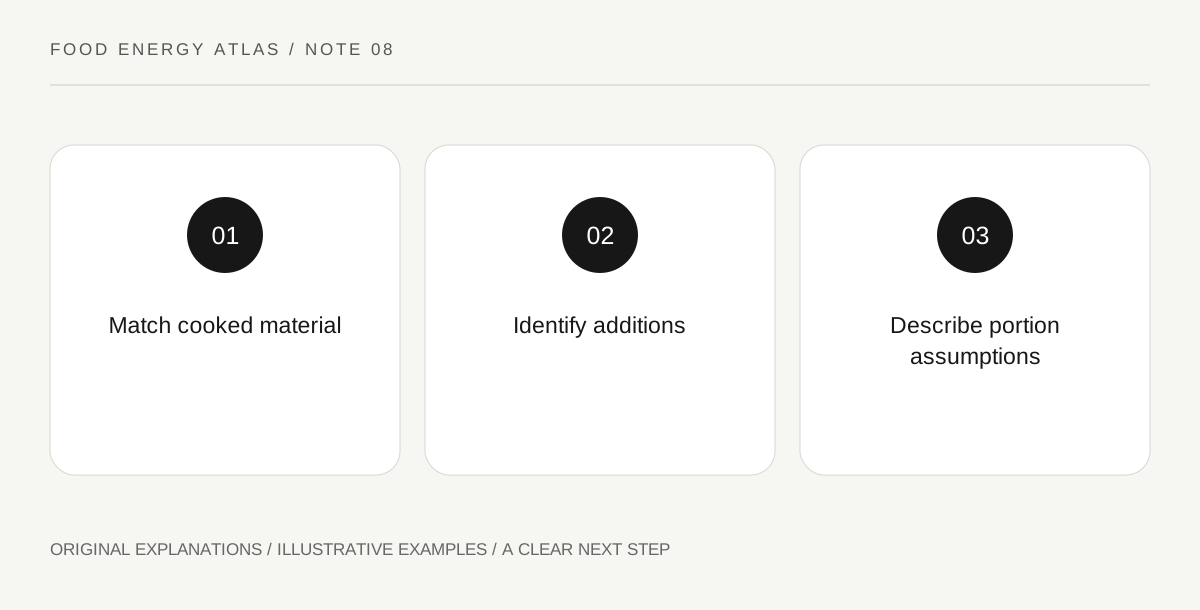
Original explanatory diagram. Read the full method and limitations below.
Select the vegetable and state
Search for the specific vegetable and a preparation such as raw, boiled, drained or cooked. Read whether the record includes salt, fat or sauce. Similar-looking results may describe different edible parts, including leaves, stalks, flesh or a mixed vegetable product.
Weigh the part you intend to eat. A whole untrimmed vegetable can include stems, peel or other material removed before serving, depending on your preparation. The reference should match that edible material. Keeping the selected description beside the grams helps distinguish a measurement of raw ingredients from a measurement of the finished vegetables on the plate.
Do not borrow a raw concentration blindly
Cooking can change water content and therefore energy concentration per 100g. Roasting may reduce the weight through moisture loss, while boiling and draining describe another finished state. The lower or higher cooked concentration is not a direct measurement of whether a vegetable gained or lost nutritional quality.
For a simple cooked portion, use a close cooked reference where available. For a known recipe, document the starting ingredients and finished yield. Avoid treating a raw weight and a cooked weight as interchangeable just because they share the same vegetable name. The relevant denominator is the material described by the source, not the size of the serving bowl.
Make oil and sauces visible
If a plain vegetable reference excludes added oil, estimate oil as a separate ingredient. Measure the amount actually used in the recipe rather than assuming every roasted vegetable has the same coating. However, oil left in a pan or dressing left in a mixing bowl creates uncertainty about what was eaten.
Do not subtract an arbitrary percentage for leftovers in the pan. State your assumption, or use an appropriate prepared-food reference if it better describes the finished dish. If that reference already includes added fat, adding the full recipe oil again may double count it. A transparent method is more useful than selecting whichever number seems smallest.
Portion mixed vegetables thoughtfully
A tray containing potatoes, peppers, courgettes and onions is a recipe with several components. One generic mixed-vegetable value may describe a different blend. For a home-prepared tray, calculate components separately when the distinction matters and divide the finished batch using a reasonable serving method.
Weight-based division works best when portions represent the mixture. If one serving contains mostly potato and another mostly peppers, equal weight alone does not ensure the same ingredient shares. You can serve components separately or accept a rough mixed-dish estimate. Precision in the final multiplication cannot fix an unknown distribution of ingredients.
An illustrative calculation
For an illustrative tray, suppose the vegetables together contribute 200 kcal and the added oil contributes 180 kcal. If all ingredients remain in an evenly distributed finished batch weighing 500g, the simplified estimate is 76 kcal per 100g. A150g representative portion would be 114 kcal. Oil left behind or uneven portioning changes the assumptions. The example demonstrates batch reasoning and does not claim a measured value for a particular vegetable recipe.
Practical checks
Optional checkboxes save only in this browser.
Questions that come up
Are plain vegetables always effectively zero calories?
No. The reference records contain energy values for the described edible food. Whether measuring that energy is useful for your purpose is a separate question; this tool does not require tracking every vegetable.
Can I estimate restaurant roasted vegetables exactly?
Usually the oil quantity and recipe are unknown. A matching prepared entry can offer a rough reference, but an exact-looking number would overstate what the available information can establish.
References and scope
These sources support the factual background. Examples and exercises are original illustrative teaching material. References do not imply endorsement.
- USDA FoodData Central downloadable datasets — The original SR Legacy CSV archive, its final 2018 release and the source of the searchable food records.
- USDA FoodData Central data-type documentation — Differences among historical generic reference data, foundation foods and branded label data.