Reference basics3 min read
A calorie figure needs both a unit and an amount of food. Without those two details, a large number on one package and a smaller number in a database cannot be meaningfully compared. Identify what was measured before deciding what the figure says about your own portion.
Read the guide ↗
Reference basics3 min read
Weighing carefully is only useful when the database describes food in the same state. Raw chicken, cooked chicken, dry pasta and drained cooked pasta are different reference objects. A mismatch can overwhelm the benefit of an accurate kitchen scale even when the arithmetic itself is correct.
Read the guide ↗
Reference basics3 min read
A food-composition value refers to the edible material described by its record. A banana weighed with its skin or a fish portion weighed with bones can therefore produce a misleading result. Separate container weight and discarded material before treating a scale reading as edible grams.
Read the guide ↗
Plants and grains3 min read
Dry and cooked rice or pasta can appear far apart in a calorie table because their water content differs. Follow the actual preparation state rather than the lowest number in a search result. Distinguish a dry ingredient, a cooked batch and the portion served from it.
Read the guide ↗
Plants and grains3 min read
Plain boiled potato, baked potato and fried potato pieces belong to different reference descriptions. Weights and added ingredients differ, and a topping may be a separate part of the meal. Read those details instead of looking for one universal number assigned to every potato.
Read the guide ↗
Plants and grains3 min read
A bag of dry lentils and a bowl of cooked lentils are not interchangeable calorie references. Canned beans add another question: does the weight include packing liquid? Identify the edible preparation before calculating, and keep sauces separate unless the selected record already includes them.
Read the guide ↗
Plants and grains3 min read
Fruit names cover very different foods in a reference database. Fresh apple, dried apple and sweetened apple juice cannot share one calorie figure simply because they come from the same fruit. Compare the exact product form, edible weight and any packing liquid before drawing conclusions from the number.
Read the guide ↗
Plants and grains3 min read
A vegetable's name does not describe its complete preparation. Plain steamed broccoli, roasted broccoli with oil and a creamy broccoli dish have different ingredient stories. Match the edible cooked material first, then account for additions in a way that avoids both omissions and double counting.
Read the guide ↗
Kitchen calculations3 min read
Small ingredient weights can make a noticeable difference to an energy estimate, and cooking oil is a common example. The challenge is not complicated multiplication. It is defining whether the measured amount was added, remained in the dish or was discarded, and keeping those quantities distinct.
Read the guide ↗
Plants and grains3 min read
A handful of nuts is an intuitive serving description but an uncertain measurement. Shells, roasting ingredients and mixed products add more differences. Use the edible food and its exact form as the reference, then calculate the weight you actually intend to describe rather than a universal handful.
Read the guide ↗
Protein foods3 min read
A coffee order and a milk carton do not describe the same reference amount. Dairy foods, plant-based alternatives and sweetened products vary by formulation, while labels may use volume or weight. Keep the actual product, amount and any additions visible instead of assigning one calorie value to every milky drink.
Read the guide ↗
Protein foods3 min read
A search for beef or chicken can return many reference foods because cut, edible fat, skin and preparation matter. Choose the material you actually weigh, and distinguish a raw ingredient estimate from a cooked serving. The same animal name does not make all entries interchangeable.
Read the guide ↗
Protein foods3 min read
Plain fish, oil-packed canned fish and breaded fish products are different food descriptions. A useful estimate distinguishes the edible species and preparation, the packing liquid actually eaten and any coating. A can's total weight or a fillet's appearance does not provide all that information.
Read the guide ↗
Protein foods3 min read
An egg count is convenient, but a food reference may describe grams of edible whole egg, white or yolk. Size and preparation affect what that count represents. Separate shell weight and cooking additions before using a calorie figure to describe an omelette, boiled egg or other egg dish.
Read the guide ↗
Plants and grains3 min read
Two bread slices can differ in thickness, size and ingredients. A per-slice label is useful for that product, while a generic reference often uses 100g. Match the bread and the weight basis before comparing a sandwich, a thick bakery slice or bread that has been toasted.
Read the guide ↗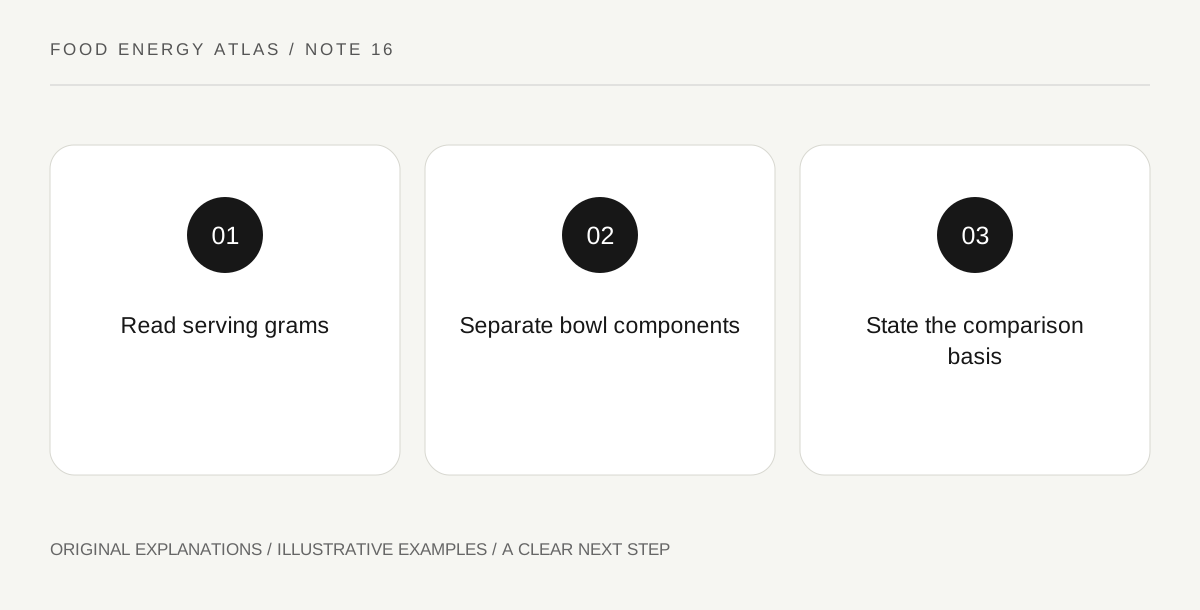
Plants and grains3 min read
A full bowl of cereal is a visual description, not a standardized weight. Flakes, dense granola and puffed products occupy space differently, and milk or toppings add separate ingredients. Read the package reference and measure the portion you want to understand before comparing breakfast bowls.
Read the guide ↗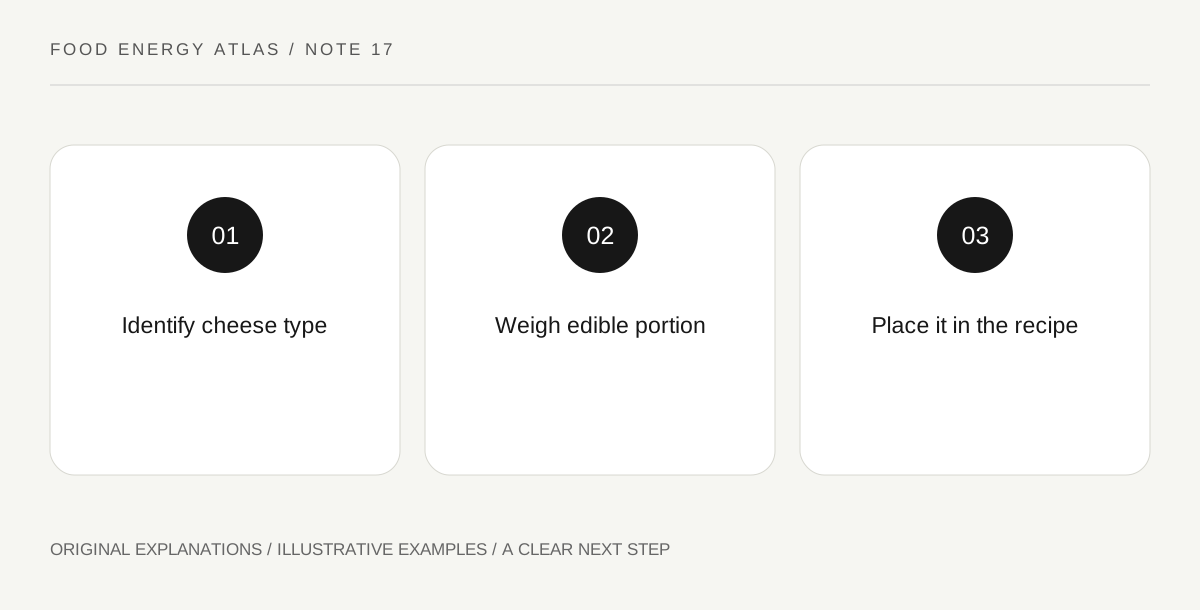
Protein foods3 min read
A cheese slice, a spoonful of soft cheese and a handful of grated cheese are different portion descriptions. Cheese type and moisture also vary. Start with a matching product or reference, then weigh the edible amount rather than transferring one per-piece figure across unrelated cheeses.
Read the guide ↗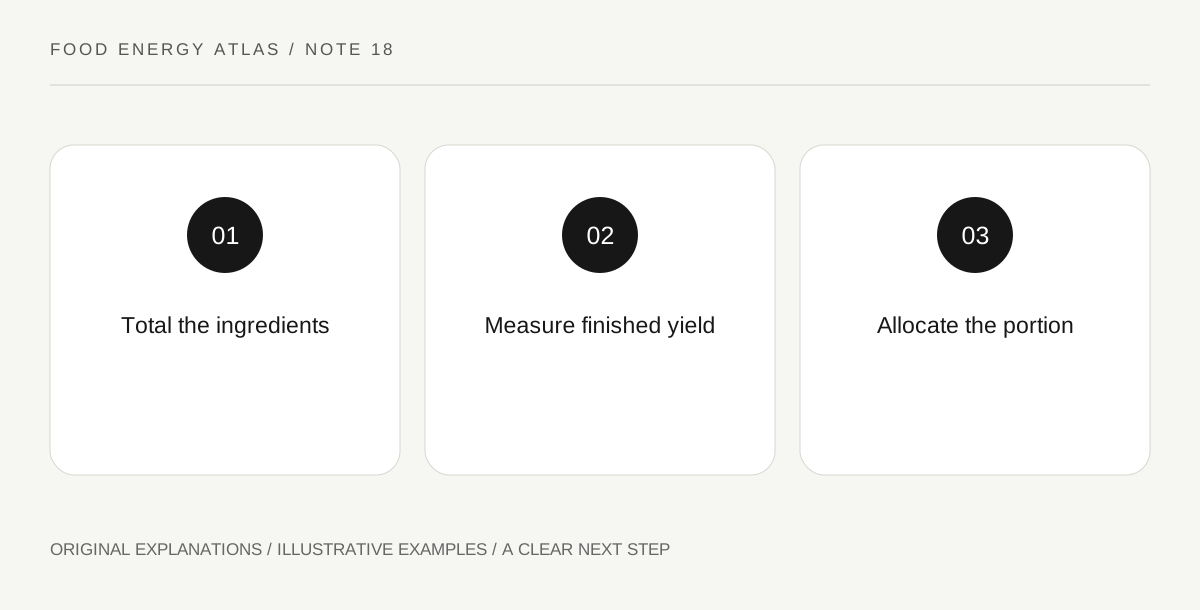
Kitchen calculations3 min read
A recipe estimate becomes easier to understand when ingredients, final batch weight and portion weight are recorded separately. This method can describe a homemade dish with known ingredients, provided its assumptions remain visible. It cannot turn uncertain ingredient data or uneven servings into an exact laboratory result.
Read the guide ↗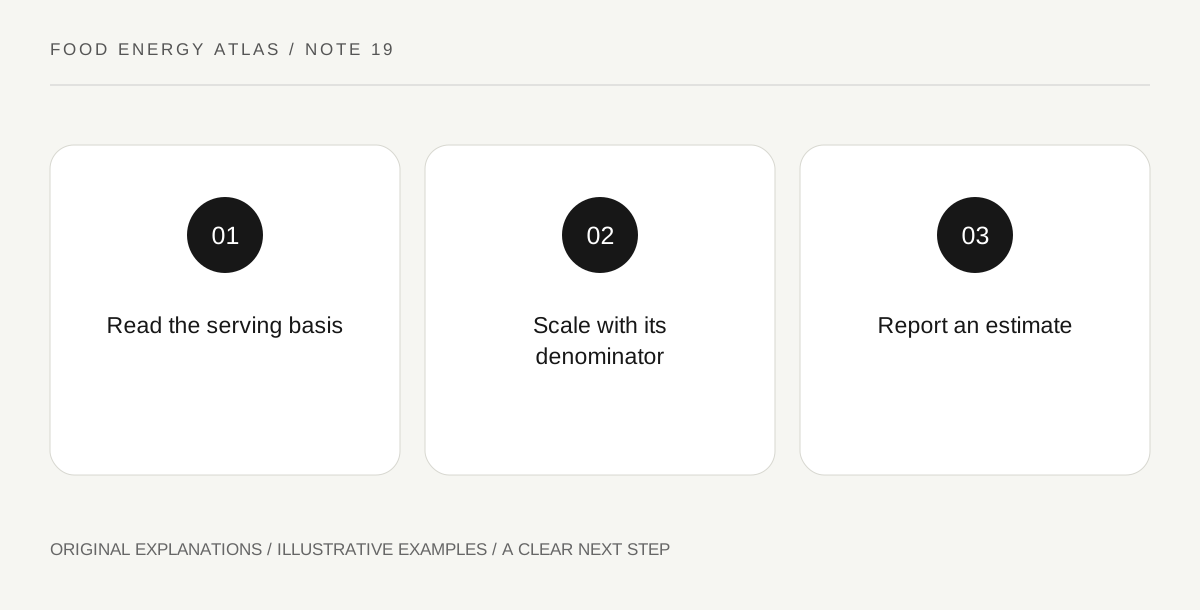
Reference basics3 min read
A package label provides a defined reference for a product, but the number still needs its serving context. A calculator can display many decimals after scaling it; that does not make the input more precise. Read the serving basis and preserve sensible uncertainty instead of treating every derived digit as measured fact.
Read the guide ↗
Kitchen calculations3 min read
A restaurant meal can be difficult to reconstruct because ingredient quantities and preparation are hidden. Published menu information can help, but it belongs to a specified item and configuration. Use it within that scope and keep a rough component estimate visibly different from an analysis of the kitchen's actual recipe.
Read the guide ↗